Every engagement deserves a consultant who never forgets. Managent Consultant joins your team on each project. It reads everything the client sends, keeps the knowledge base current, and drafts the reports and deliverables your team signs off.
Invite-only workspaces · Client data stays private to the project team
consultant.managent.com
For the people who carry the engagement. Shown with a fictional demo project. 1 place for every source
1 living page per project
0 setup forms to fill
Every fact traced to its source
01 / A connected approach
From first brief to final deliverable. Practical support for every stage of the engagement, so your team spends its time on judgment, not on paperwork.
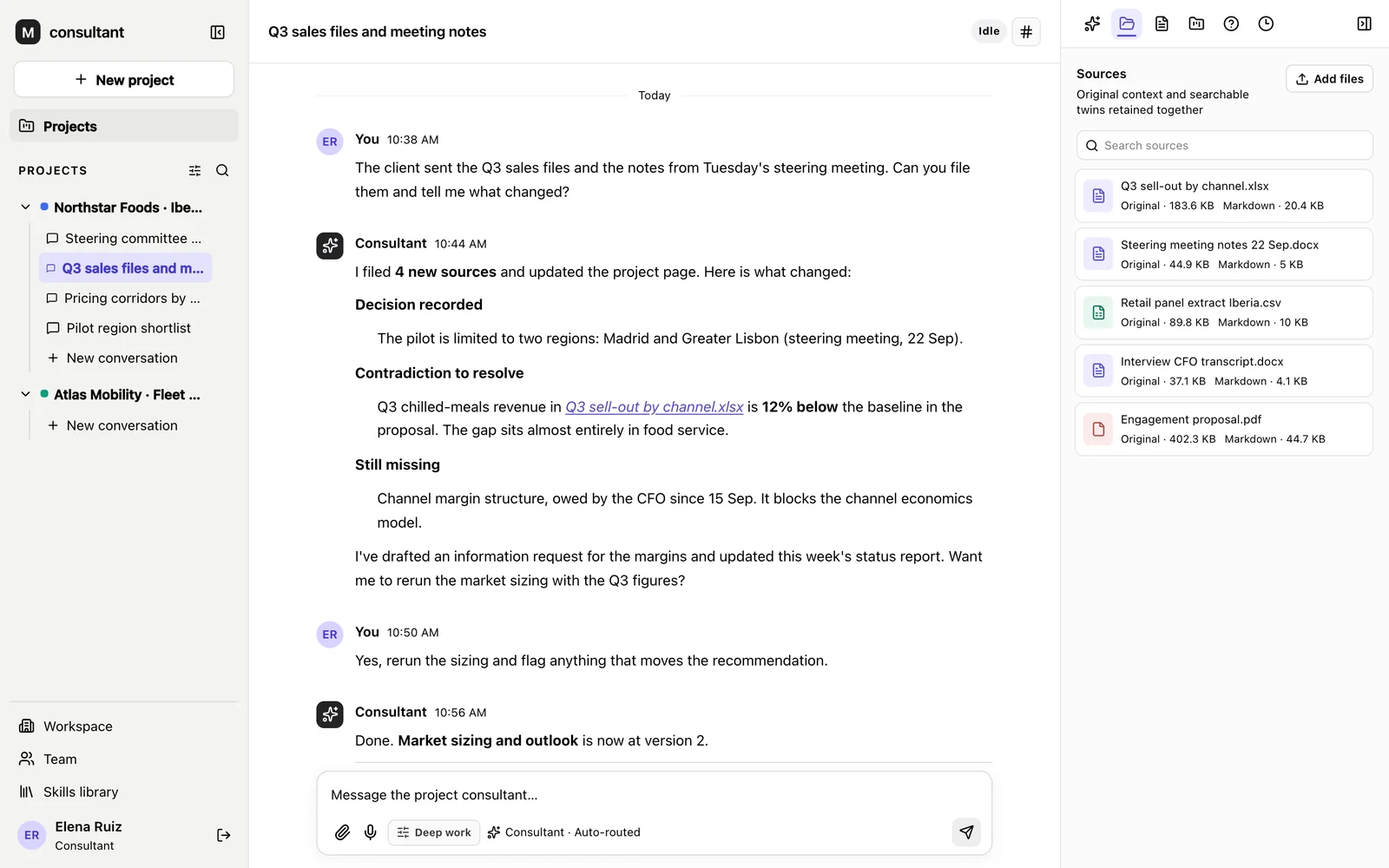
01 Capture everything. Proposals, client files, meeting transcripts and email land in one place. Every source is kept, converted and filed with its provenance.
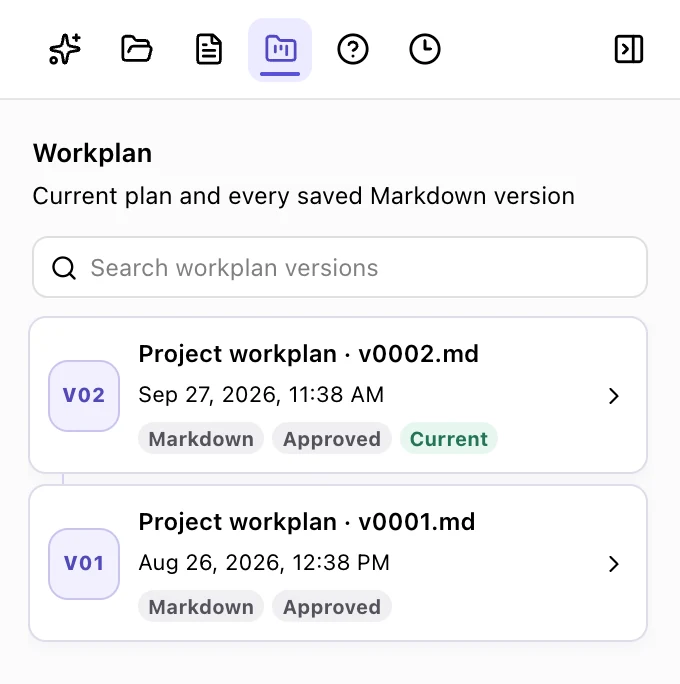
Inbox and transcript ingestion Private originals, readable twins Gaps and contradictions flagged 02 Know the project. The Consultant distills a living knowledge base: decisions, risks, assumptions and open questions, always traceable to their source.
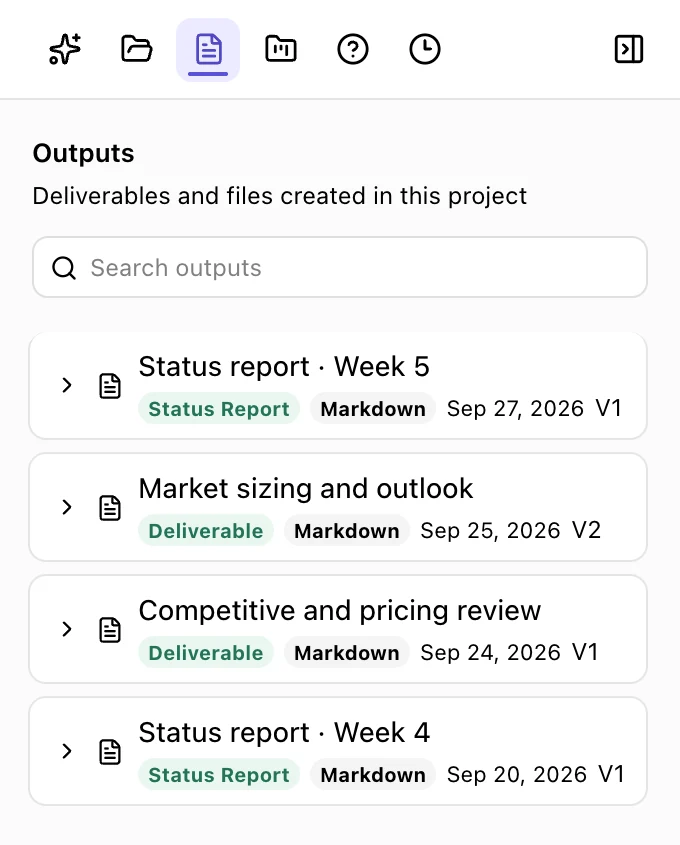
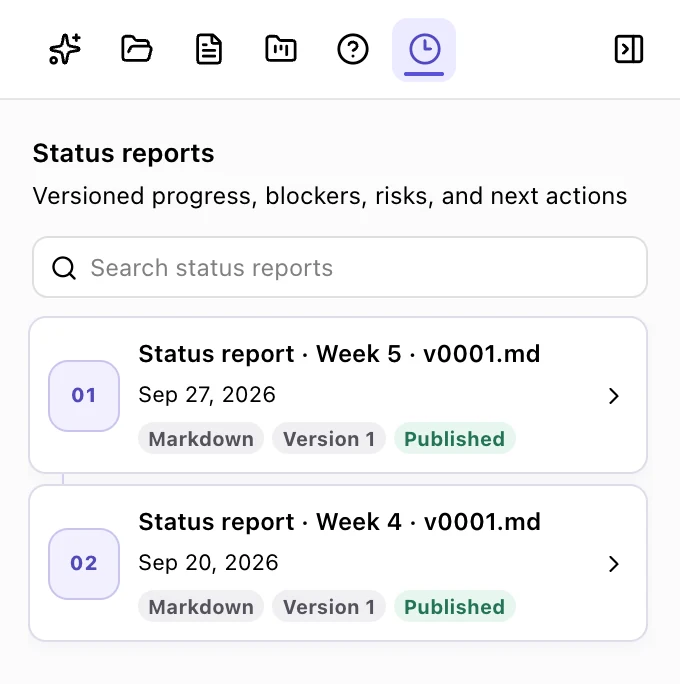
Versioned workplans and briefs Decision and risk registers Information requests tracked 03 Deliver sooner. Drafts grounded in the evidence, status reports that write themselves, and a second pair of eyes on every deliverable before it ships.
Deliverable drafts Weekly status reports Quality review before release 02 / Clarity for the next move
Where the project stands. What comes next. Every project gets a living page: progress against the workplan, what the client still owes, open risks and the next deliverables, all in one view.
See the workspace in a demo Project overview Market entry study · Week 6 of 10
Illustrative data Next up Channel margins are blocking the pricing analysis. Information request drafted for review.
Example figures shown to illustrate the workspace.
03 / How it works
A little progress. Every day. Talk to the Consultant the way you would brief a new team member. It keeps the project in order while you move the work forward.
Request a demo 01 Book a demo See the workspace on a real engagement and decide whether it fits how your team works.
02 Set up your workspace Invite your team. Access is limited to members of your organization.
03 Start a project by conversation Tell the Consultant about the engagement and share the proposal. No setup forms.
04 Feed it the engagement Forward email, drop in files, upload transcripts. The project page updates as you go.
05 Review, ship, improve Approve drafts, send reports and keep every baseline versioned for the next decision.
04 / Governance
Your client's trust, kept. Consulting runs on confidentiality. The workspace is designed so your team stays in control of what is known, shared and sent.
Private by project Client materials are visible only to the authorized project team, inside an invite-only workspace.
Every fact has a source Knowledge keeps its provenance and separates what the client said from what the Consultant inferred.
Humans approve baselines Briefs, workplans and reports are versioned. Consequential changes wait for review.
Portable knowledge Project knowledge lives in readable Markdown you can export, not in a black box.
Your next engagement
Put a consultant on every project. See how Managent Consultant works on an engagement like yours.